The Location of Ancient Cities in Israel
There were several factors that went into determining where people lived in ancient times. These factors centered around providing the basics of life such as food and water, as well as defending one’s city in the time of war. The best place to build and defend a city was on top of a high hill with steep slopes, and with a water source inside the city walls that you could get to during a siege. We have come up with five “W’s” to help remember the key factors.
Walls
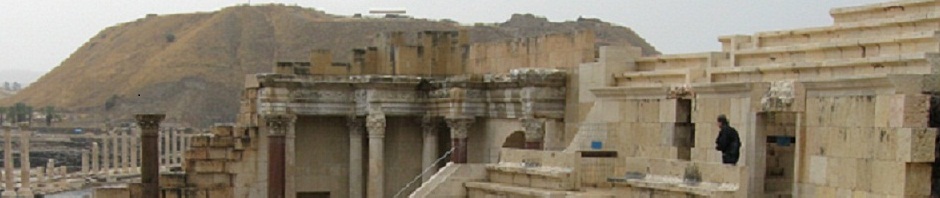
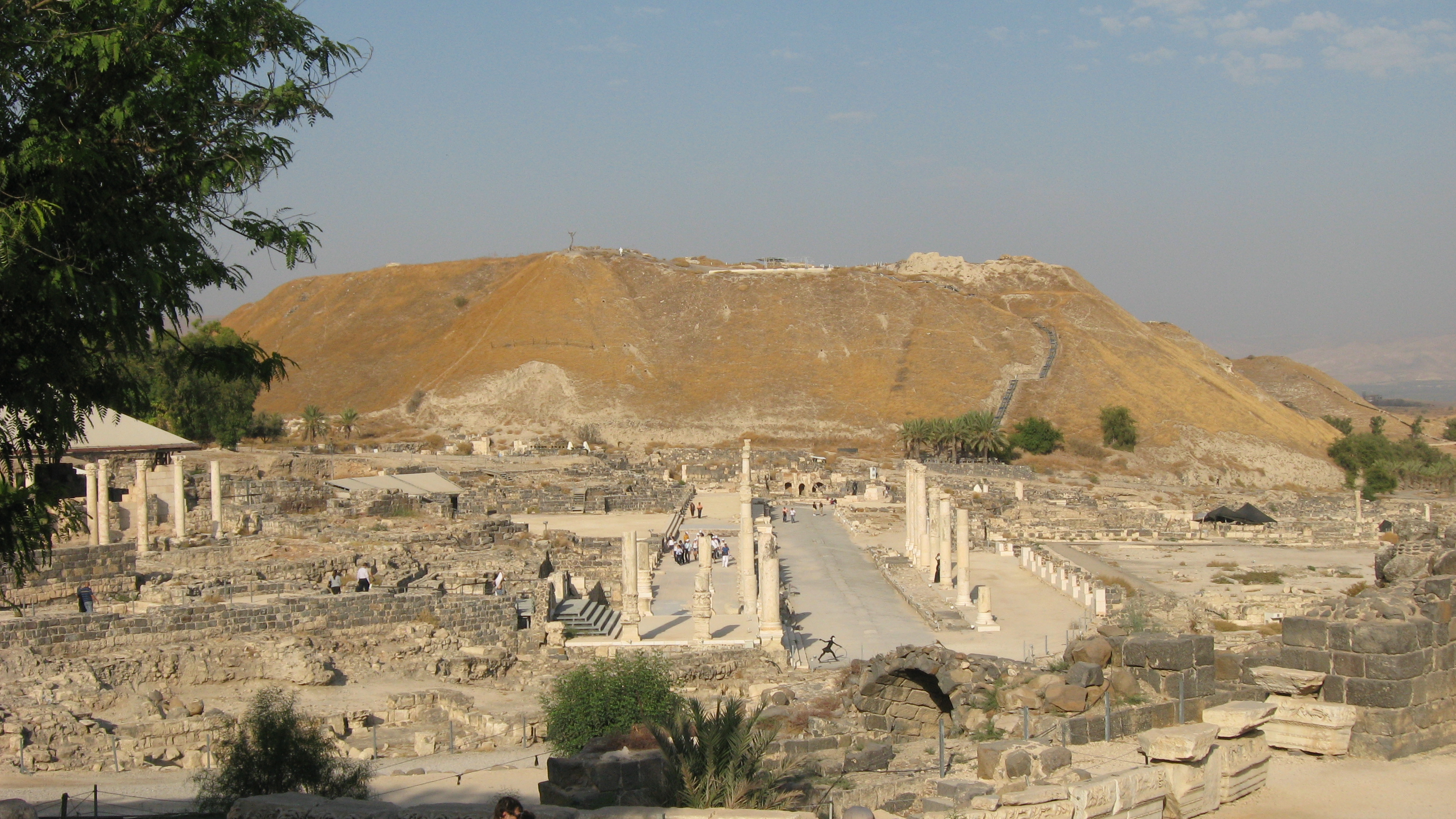
Most soldiers know in a battle it’s best to be holding the high ground. This was especially true in ancient warfare. So long ago when people looked for a site for their home or for their city, they looked for a high hill with sharply sloping sides. They would then build a wall around the top of the hill, and build their homes within that wall. That’s why Lachish, Beth Shean (pictured in the masthead above), Masada, Machaerus and Jericho were built where they were. Enemy armies couldn’t scale the sides of the hills—at least not easily, and by building a wall around the top of the hill, it made their city even more impregnable.
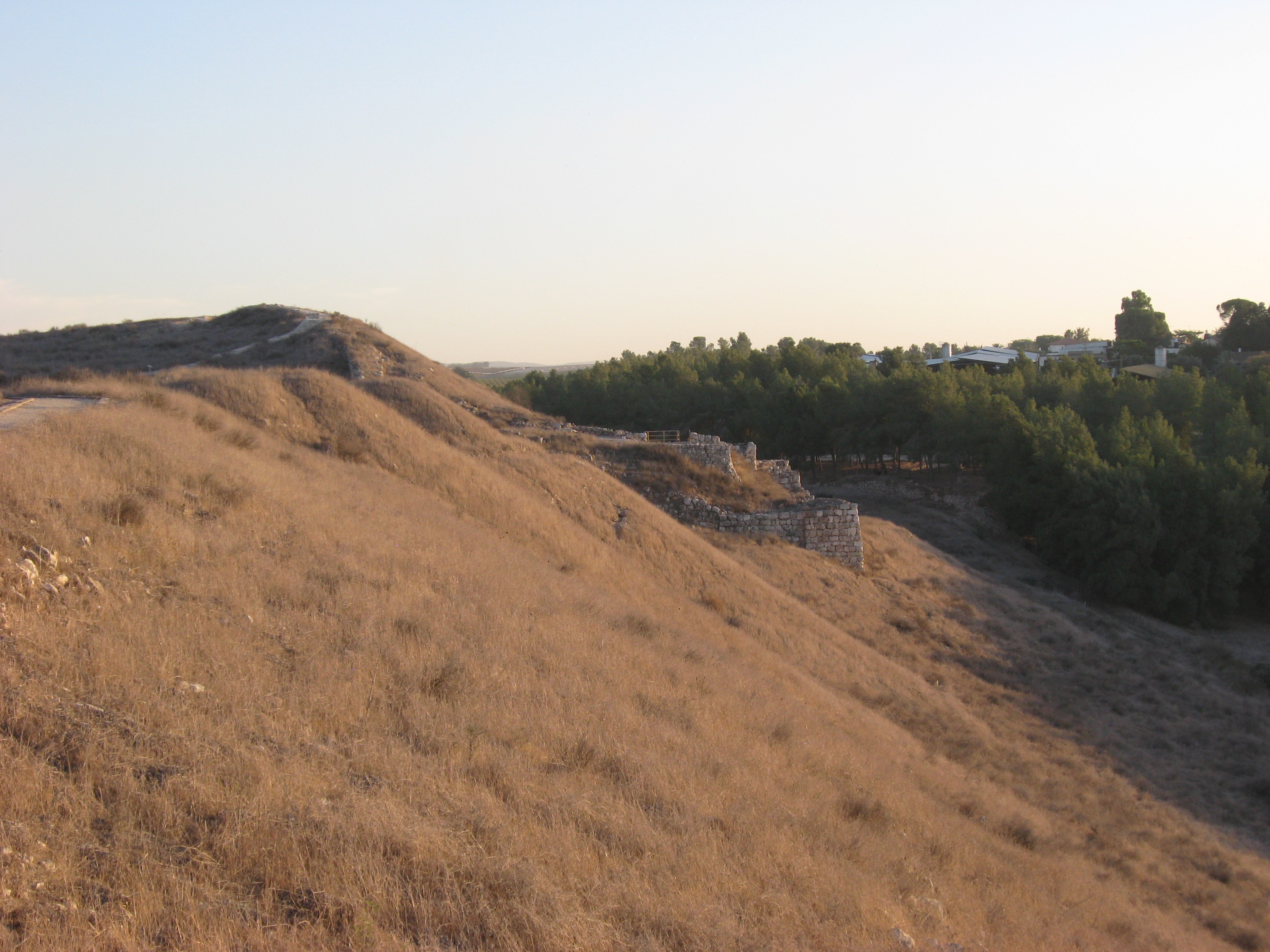 This picture of Lachish showing the area of the city gate gives some sense of the height and steepness of the slope of the “tel” on top of which the city was built. King Sennacherib of Assyria was able to conquer Lachish only by building a ramp up to the city wall.
(A “tel” is a hill on which ancient cities were built, and which now contains layers
of ancient civilizations, one civilization built on top of another as each civilization
was destroyed through war, earthquake, or simply the ravages of time).
(Picture Source: Rick Moe, Israel & Jordan Trip 2010).
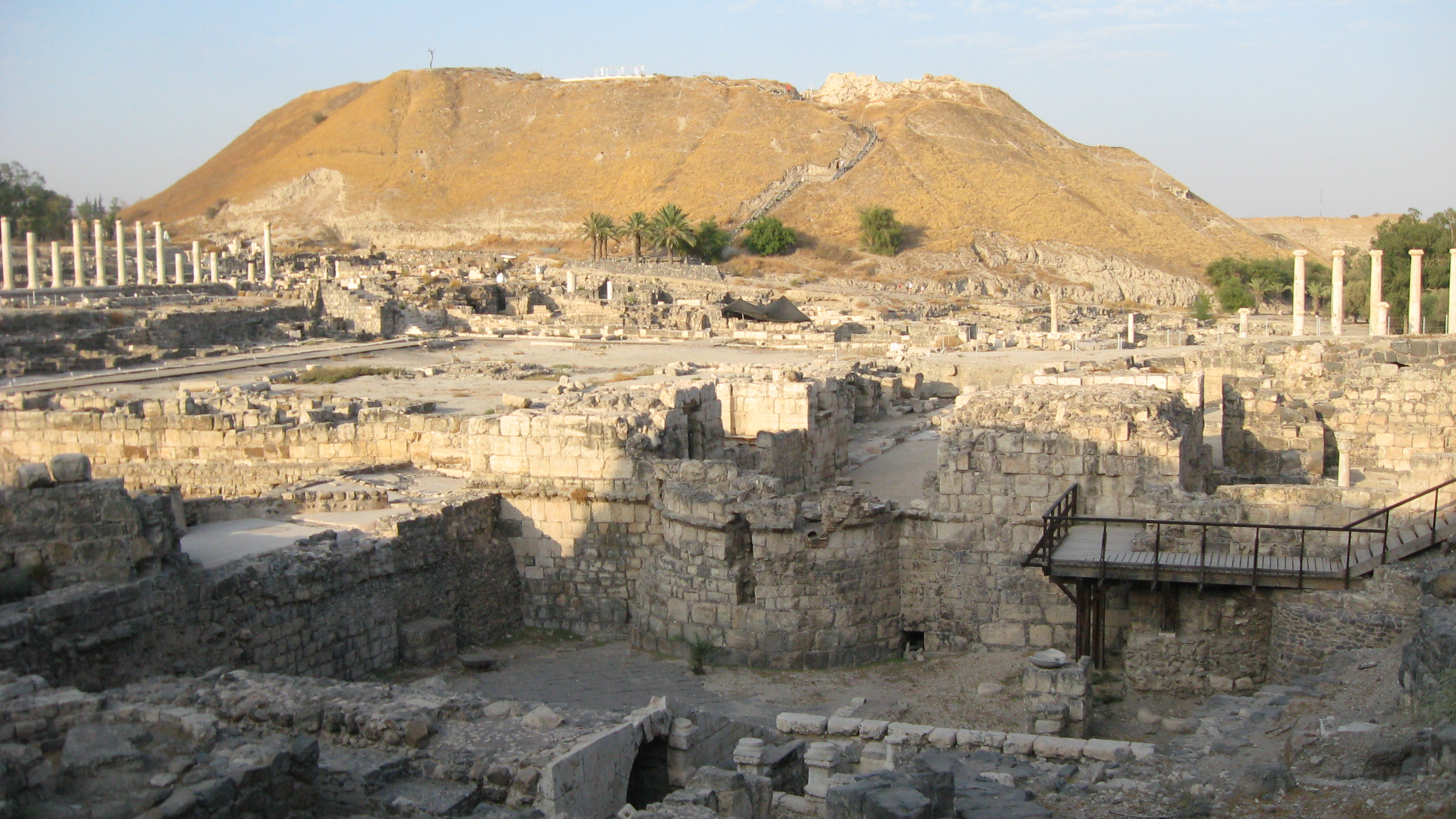 Beth Shean is located just south of the Sea of Galilee and is where King Saul’s body was hung on the city walls after he died. In King Saul’s day the city walls would have been on top of the tel in the background. This tel is very high, which made the city impregnable.
In fact, the Israelites did not conquer Beth Shean under Joshua’s or any of the Judges’ leadership. It was not until the era of King David and King Solomon that Israel conquered and controlled Beth Shean. Why? The high hill, the steep slopes of the hill, and the city wall on top of the hill (the city wall is now gone), made it virtually impossible to conquer.
The ruins in the foreground are from the Roman era (after the time of Christ).
(Picture Source: Rick Moe, Israel & Jordan Trip 2010).
 Note the height of Masada and the steepness of the slopes. This is why even the mighty Roman army took two years to conquer Masada against approximately 1,000 Jewish defenders in the first century A.D. (Picture Source: Rick Moe, Israel & Jordan Trip 2010).
 Machaerus is the palace fortress where Herod Antipas most likely imprisoned
John the Baptist, and later beheaded him. It is a volcano shaped hill with a flat area
on top of which a palatial fortress was built. Jewish leaders, and later the Herod family, selected this hill because of it’s height and the steep slope which made it easily defended.
(Picture Source: Rick Moe, Israel and Jordan Trip 2010).
“Walls” come into play in the story of the conquest of Jericho by the Israelites. Joshua didn’t have the technology to scale the walls of Jericho or knock them down. Later in history armies learned to build earthen ramps up to the city walls and use battering rams like the Romans did at Masada, and the Assyrians did at Lachish. However, in Joshua’s day, they either didn’t know how to do this, or the process simply hadn’t been invented. So God stepped in and did for the Israelites what they couldn’t do—He knocked down the walls of Jericho so the Israelites could get into the town and conquer the city.
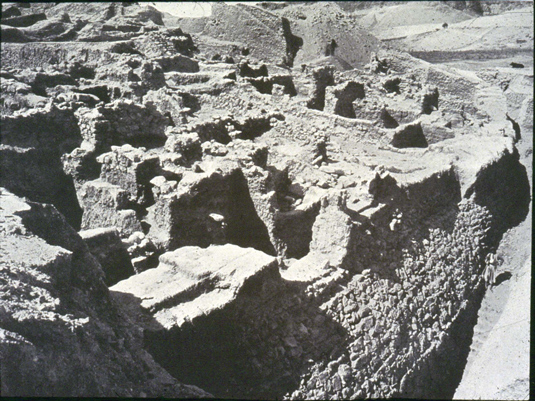
Picture of ancient Jericho showing the excavations by Sellin and Watzinger (they excavated in 1907-1909, 1911) of Jericho’s revetment wall of uncut stones, a mud brick wall on top of the revetment wall, and some of the buildings inside the city (on the left). Note the man standing at the foot of the revetment wall on the far right.
(Source of the picture above and drawing below: Dr. Bryant Wood of the Associates for Biblical Research,
http://www.biblearchaeology.org/post/2008/05/01/Did-the-Israelites-Conquer-Jericho-A-New-Look-at-the-Archaeological-Evidence.aspx#Article)
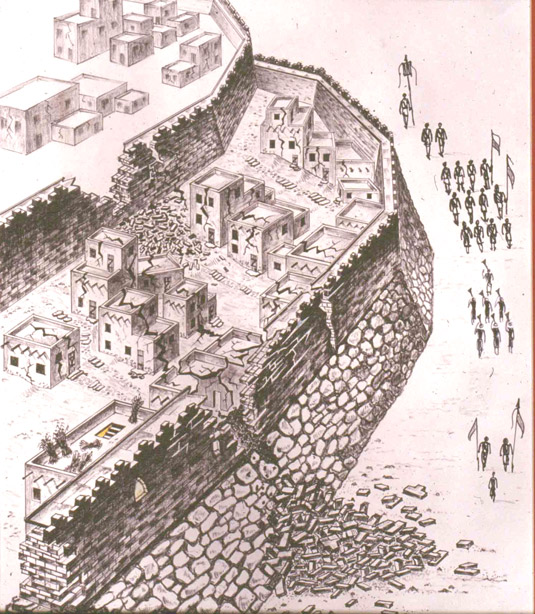
Drawing of the walls of ancient Jericho showing on the right the revetment wall of larger uncut stones on the bottom with the mud brick wall on top of it. It was the mud brick walls which came down as shown in the drawing. Further up the tel was a second mud brick wall protecting the inner city. Portions of this wall also collapsed. Rahab’s house would have been located on the outer wall on a section where the mud brick wall did not collapse.
Water
You also needed to have a source for water which you could guard and keep from your enemies. That’s why at Beersheba they dug such a deep tunnel within the city walls to get to the spring at the base of the hill. (They did the same at Megiddo, Gibeah and Jerusalem). The reason why ancient Jerusalem is located on the hill where it is and not on the higher hills of the Mt. of Olives or the Western Hill is that the Gihon Spring is at the foot of ancient Jerusalem. In King David’s and Solomon’s time they built a tower over the Gihon Spring in order to protect the water. The remains of these towers are visible today (see pictures below). Then later in history King Hezekiah dug a tunnel to divert the water to the Siloam Pool. That way all the water would be within the city walls during the possible siege of Assyrian army. It also kept the Assyrians from having easy access to water as they had to travel elsewhere to get the water they needed.

The water shaft at Gibeon. Note the size of the people in the top right of the photo.
The citizens of Gibeon went to a lot of work to dig this shaft from the top of the tel, through bedrock. The amount of work shows how important obtaining and protecting one’s water supply was for a city. (Photo courtesy of www.BiblePlaces.com).
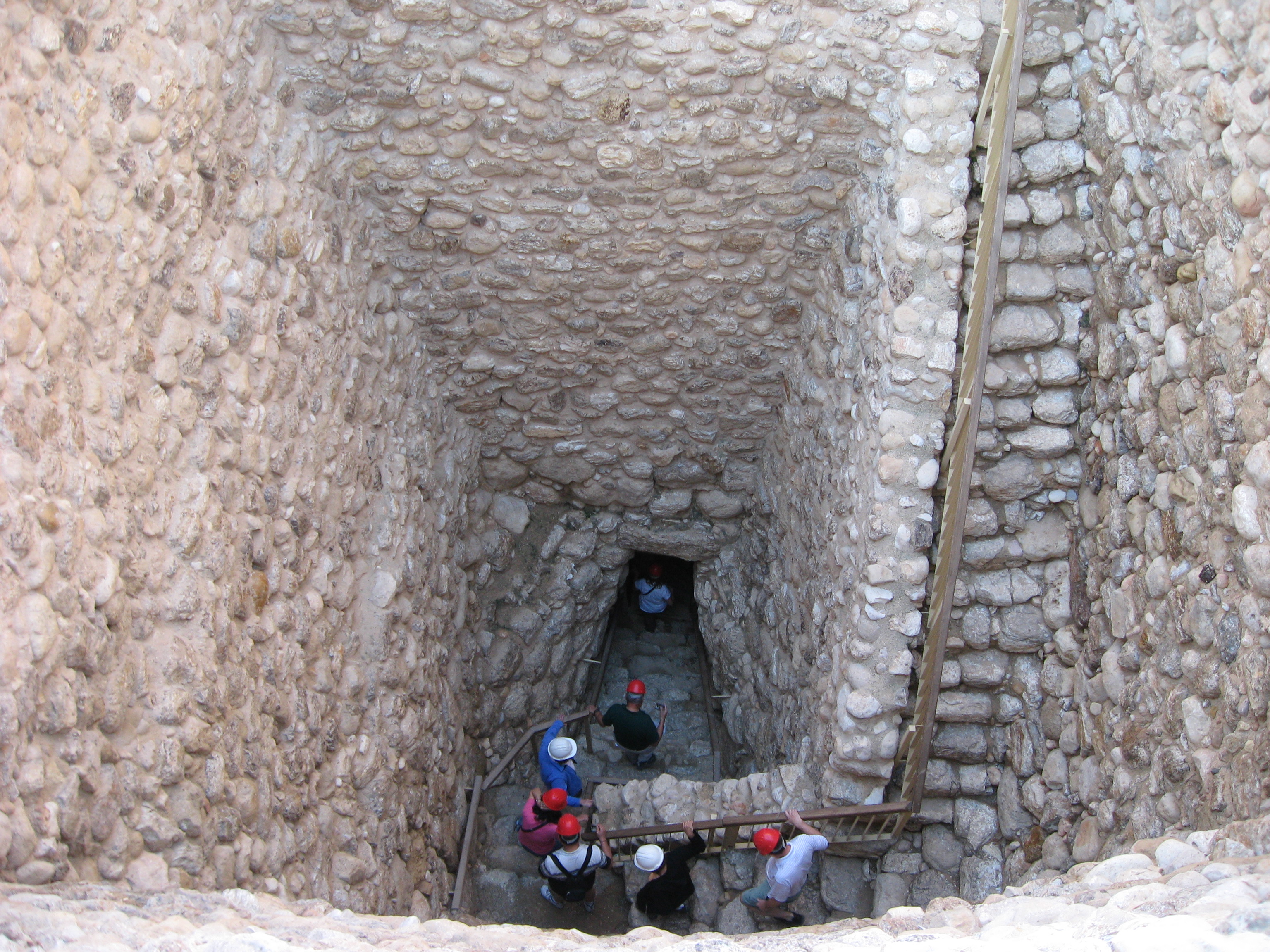 Beersheba’s water shaft is incredibly deep, and the people of Beersheba cut out large under-ground storage rooms at the bottom of this shaft to hold water.
(Picture Source: Rick Moe, Israel and Jordan Trip 2012).
 The top portion of Hazor’s water shaft. The hole is very large at the top and lined with stones to keep the dirt from falling into the shaft.
(Picture Source: Rick Moe, Israel and Jordan Trip 2012).
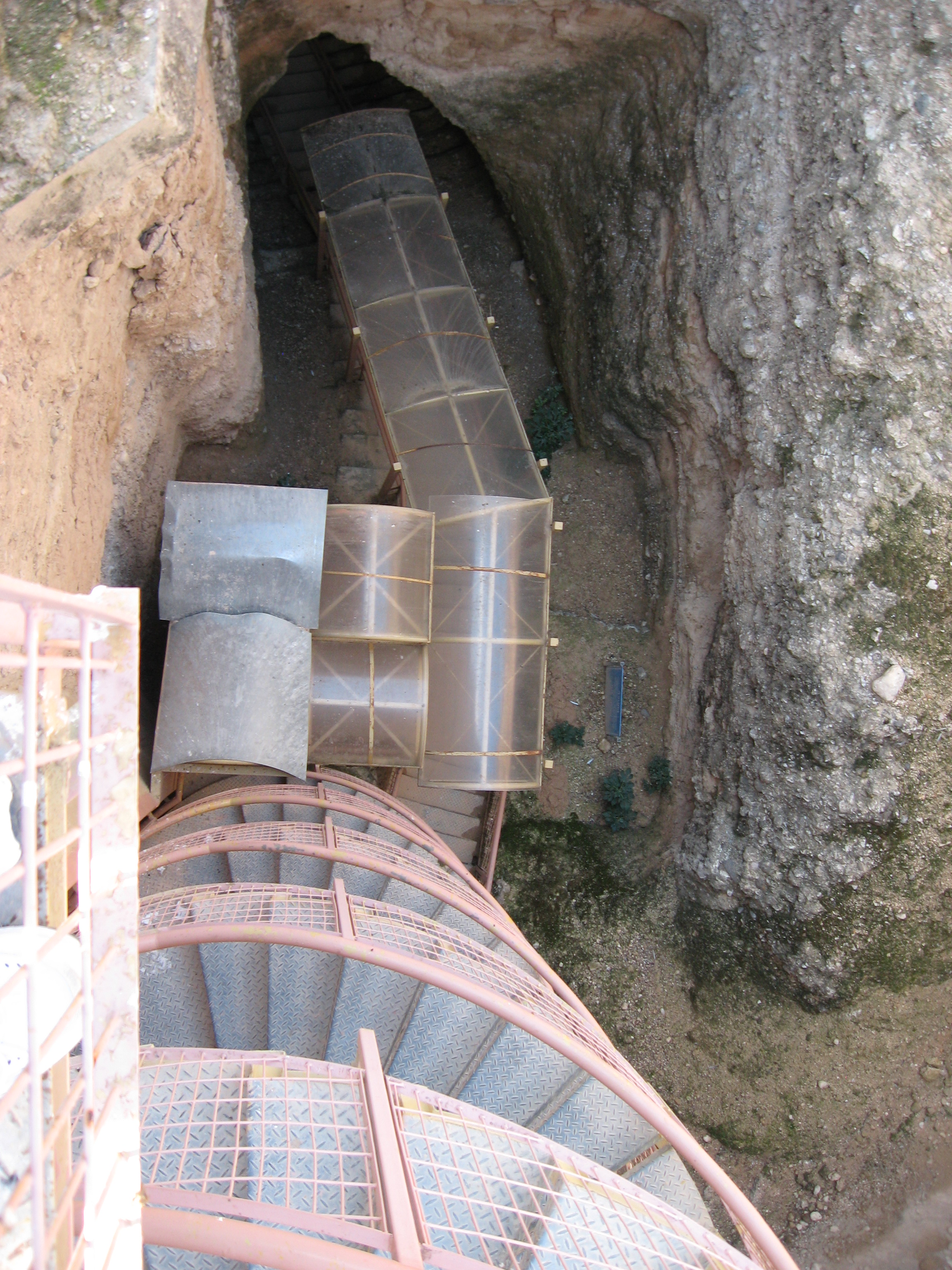 Looking down into Hazor’s water shaft. The modern stairs and covered walkway at the bottom protect visitors from any rocks which might fall into the shaft.
(Picture Source: Rick Moe, Israel and Jordan Trip 2012).
Wheat
You had to have “wheat” (which stands for all types of food) which you could grow, harvest, collect and store inside the city walls before the enemy got to your city and laid siege to it. Of course, wheat (food) was needed all the time, so cities were located on defensible hills near valleys where wheat and other crops could be grown.

 Two pictures showing jars with burnt grain in them discovered during excavations at Jericho. This fits the Biblical description of the siege of Jericho by Joshua right after the Spring harvest. The inhabitants of Jericho would have gathered the grain harvest and stored it in their city to eat during the siege by the Israelites. The Bible says after the Israelites captured Jericho they burned the city and did not take anything from it, leaving the recently harvested grain in the storage jars. Normally conquering armies would have taken any grain in order to feed their soldiers. So to find grain left in a conquered and burnt city like Jericho is unusual. (Source of the two pictures above: Dr. Bryant Wood of the Associates for Biblical Research, http://www.biblearchaeology.org/post/2008/05/01/Did-the-Israelites-Conquer-Jericho-A-New-Look-at-the-Archaeological-Evidence.aspx#Article)
Wheels
“Wheels” stand for chariots which allowed technologically advanced nations to conquer less technologically advanced nations which didn’t know how to use metal or shape it into useful military machines (like swords, armor, or chariots). In the Old Testament periods of the Conquest and Judges, Israel was the less technologically advanced nation, and the more advanced nations were Egypt, the Philistines, and the Canaanites.
 King Tutankhamen’s chariot as displayed at the King Tut exhibition
at The Trafford Centre in Manchester, England.
(Picture Source: https://skypegirl.wordpress.com/2010/11/02/king-tut-exhibition-at-trafford-centre/ Accessed 12/5/2015).
Judges 1:19 states, “The Lord was with the men of Judah. They took possession of the hill country, but they were unable to drive the people from the plains, because they had iron chariots.” Chariots work well on flat ground like what you find on “the plains.” But they don’t work well on hills and ravines like what you find in “the hill country.” That is why Judah could take possession of the hill country, but not the plains. The people living on the plains had chariots. They also had the ability to use iron, which the Israelites did not–at least not through the reign of King Saul.
First Samuel 13:19-22 states that during the reign of King Saul, “Not a blacksmith could be found in the whole land of Israel, because the Philistines had said, ‘Otherwise the Hebrews will make swords or spears!’ So all Israel went down to the Philistines to have their plowshares, mattocks, axes and sickles sharpened…. So on the day of the battle not a soldier with Saul and Jonathan had a sword or spear in his hand; only Saul and his son Jonathan had them.”
This explains why David did not wear armor when he went out to fight Goliath. Remember he tried on King Saul’s armor, but it was too big for him. Saul and Jonathan were the only two men in Israel who had armor, so when King Saul’s armor was too big for David they couldn’t go to the local store and get a smaller size. David had to face Goliath without iron armor. However, God used what David had – a sling and five smooth stones – and won a great victory and brought Himself much glory through David’s faith and obedience.
At the end of King Saul’s life, the Philistines went to the Valley of Jezreel to fight King Saul and the Israelites. Why the Jezreel Valley? Because chariots work well in valleys. Israel knew this and didn’t want to fight in the valley, so they retreated to Mt. Gilboa where the chariots could not go. Even so, the Philistines were militarily superior and King Saul and his army were decimated on Mount Gilboa.
Recent evidence suggests the Philistines were able to come up the back side of Mt. Gilboa with their chariots and attack King Saul and his army from the rear. The side of Mt. Gilboa which fronts the Jezreel Valley (north side) is steep, whereas the back (south) side is less steep allowing the Philistine chariots to get up onto Mt. Gilboa and surprise the Israelites from the rear.
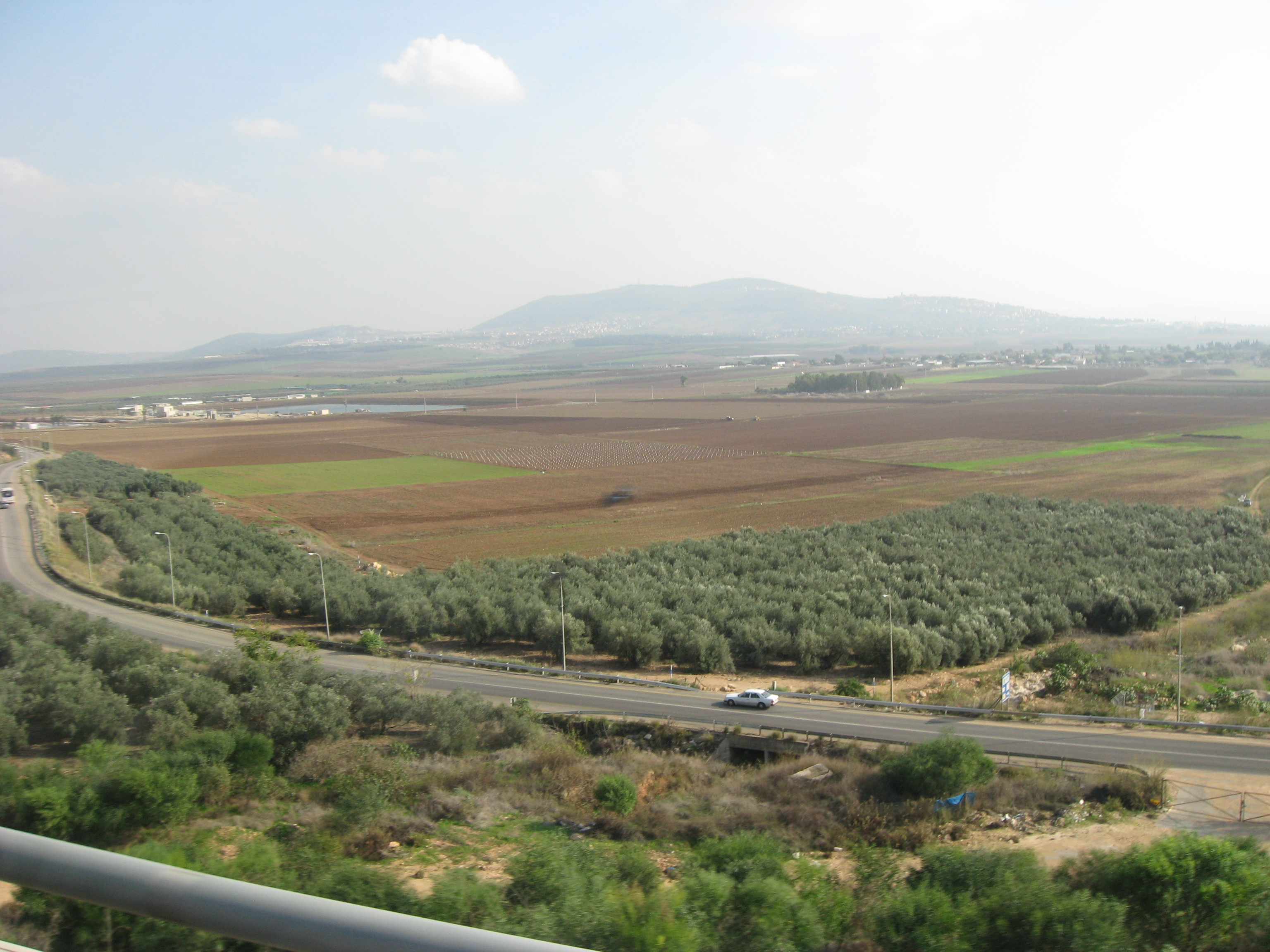 Mt. Gilboa’s north side (the range of hills in the middle of the picture) as viewed from the hills surrounding Nazareth looking southeast across the Jezreel Valley.
(Picture Source: Rick Moe, Israel and Jordan Trip 2012).
First Samuel 31:8-10 says, “The next day, when the Philistines came to strip the dead, they found Saul and his three sons fallen on Mount Gilboa. They cut off his head and stripped off his armor, and they sent messengers throughout the land of the Philistines to proclaim the news in the temple of their idols and among their people. They put his armor in the temple of the Ashtoreths and fastened his body to the wall of Beth Shan.” Beth Shan (also spelled Beth Shean) is located where the Jezreel Valley and the Jordan Valley meet.
 The Roman-era theater at Beth Shean. The hill where the Philistines hung King Saul’s body is the hill in the background. On top of this high hill there used to be a stone wall which is now gone. But in King Saul’s day, it was where his body was hung.
(Picture Source: Rick Moe, Israel and Jordan Trip 2007).
Not until King David did Israel get the technology of working with iron. Interestingly, when David was running from King Saul, one of the places he fled to (and where he lived for several years) was in the territory of the Philistines. Israel didn’t have iron technology before David lived with the Philistines, but they did afterward. Could it be that David and his men learned how to work with iron while they lived among the Philistines, then brought that technology back to Israel when David became king? If not, it sure is coincidental.
The ability to use iron is one of the main reasons why King David and King Solomon were able to build their vast kingdoms. Instead of being behind the times, they now also had the technology and knew how to use it against their enemies. As a result, they conquered the world of their day. Isn’t it interesting how God uses things like iron technology to further His plans? The lesson for us as Christians is we too should learn to use the technology and media of our day to further God’s kingdom, rather than be behind the times and let the enemy of our souls use it to his advantage.
War
Why were cities built where they were in Biblical times? Because of the issue of war.
- You built on hills, not in the valley, because you could defend yourself better on high ground. Then you built walls on top of the hills to make it even harder for your enemy to break through and get into the city.
- You built on hills which had water at the base of the hill–water which you could defend for yourself and not allow the enemy to get.
- You built on hills near valleys where you could grow wheat and other crops so you would have enough food to eat and store in times when you were under siege.
- You built on hills next to valleys where your chariots with their wheels could maneuvre and give you military superiority.
I am grateful to my friend Allan Rabinowitz who came up with these 5 “W’s.” Allan was my tour guide when I led tours to Israel and Jordan in 2007, 2010 and 2012.
 Rick Moe is Pastor of Adult Education & Senior Ministries at Golden Hills Community Church in Brentwood, California located approximately 45 miles east of the San Francisco Bay area.
 Moements